How to measure your baby at home (weight, length and head)
How to weigh your baby, measure their length and check head circumference at home, how accurate it really is, and why clinic numbers come first.
Educational content only, not medical advice. Always talk to your doctor or health visitor about your child.
In this article
- How do I weigh my baby at home?
- How accurate is weighing a baby on bathroom scales?
- How do I measure my baby's length at home?
- How do I measure my baby's head circumference?
- What should I do with my home measurements?
- How often should a baby be measured?
- How can I keep all my baby's measurements in one place?
- Quick tips for more reliable home measurements
You can get a rough idea of your baby's weight at home by weighing yourself, then weighing yourself holding your baby, and taking away the difference. Length is best measured with two people and your baby lying flat on a firm surface, and head circumference with a soft, non-stretchy tape around the widest part of the head. Home numbers are useful for curiosity and for spotting a general trend, but they are much less accurate than clinic measurements, which should always be your reference.
Here is how to do each one as carefully as possible, and how to make sense of the results.
How do I weigh my baby at home?
The simplest method uses ordinary bathroom scales:
- Put the scales on a hard, flat floor, not on carpet.
- Weigh yourself and write the number down.
- Pick up your baby, ideally undressed or in a dry nappy, and weigh yourself again holding them.
- Take the first number away from the second. That is roughly your baby's weight.
Try to weigh at a similar time of day, before a feed, with the same clothing or nappy, on the same scales. Consistency matters more than precision.
How accurate is weighing a baby on bathroom scales?
Not very, and it is worth knowing why:
- Bathroom scales are designed for adults. Many only show weight in steps of 100 grams or more, and small errors are normal.
- The subtraction doubles the error. You take two readings, each with its own small error, so the result can be out by more than either reading on its own.
- Babies wriggle. Movement shifts the reading.
- Feeds and nappies change things. A big feed or a full nappy can easily add more weight than a week of real growth.
Baby scales are more precise, but even then home readings are not the same as a calibrated clinic scale. Treat home weights as a rough guide only, and avoid weighing every day, which mostly measures normal ups and downs.
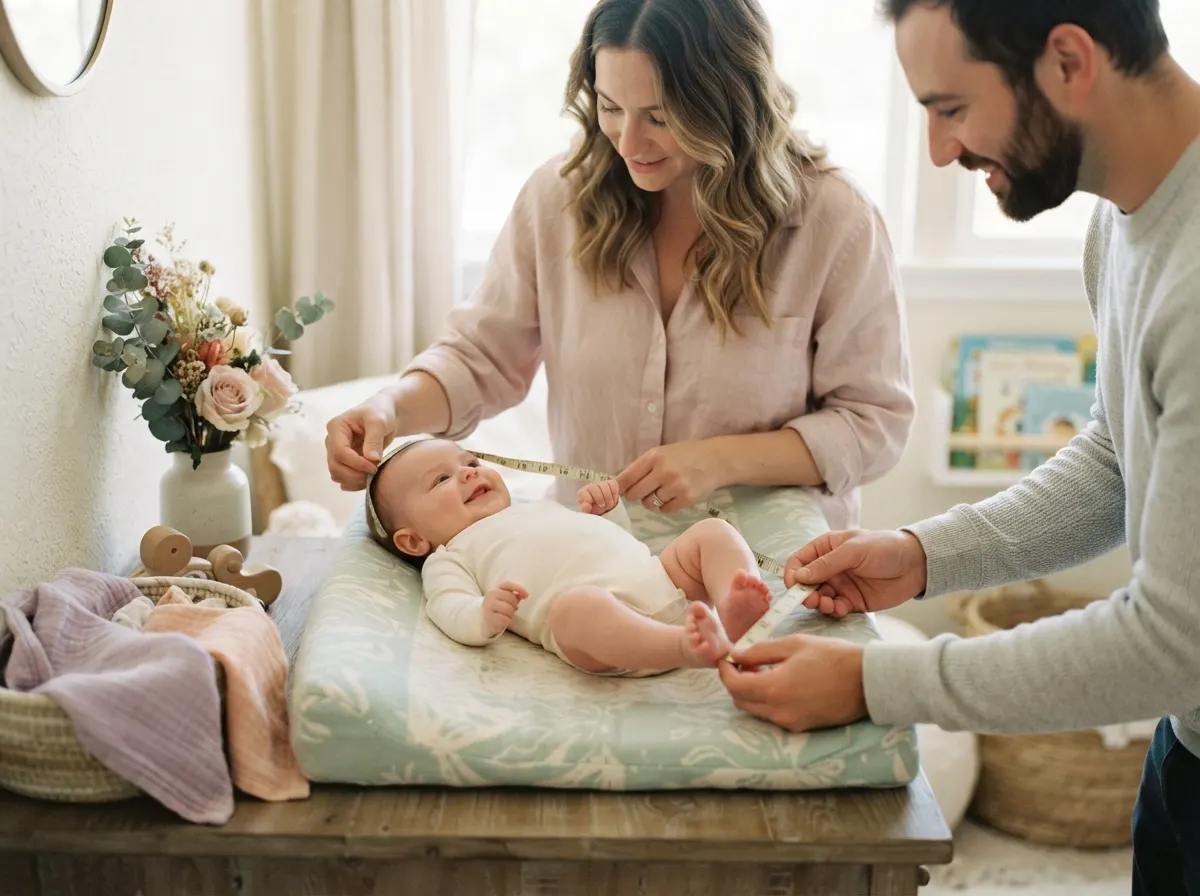
How do I measure my baby's length at home?
Babies under 2 are measured lying down, which is called length rather than height. It is genuinely hard to do well at home, so you need a helper.
- Lay your baby on their back on a firm, flat surface, such as a table with a towel on it or the floor. Never leave them unattended on a raised surface.
- One person gently holds your baby's head so they are looking straight up, with the top of the head touching a flat object, like a hardback book or a wall.
- The second person gently straightens your baby's legs, with the knees flat and the feet flexed so the toes point up.
- Mark the surface at the bottom of the heels, or place another book flat against the soles.
- Move your baby and measure the distance between the two marks with a tape measure.
Expect the result to vary by a centimetre or more between attempts. Babies curl up, and getting the legs fully straight without upsetting them is tricky. Clinics use a measuring board for this reason.
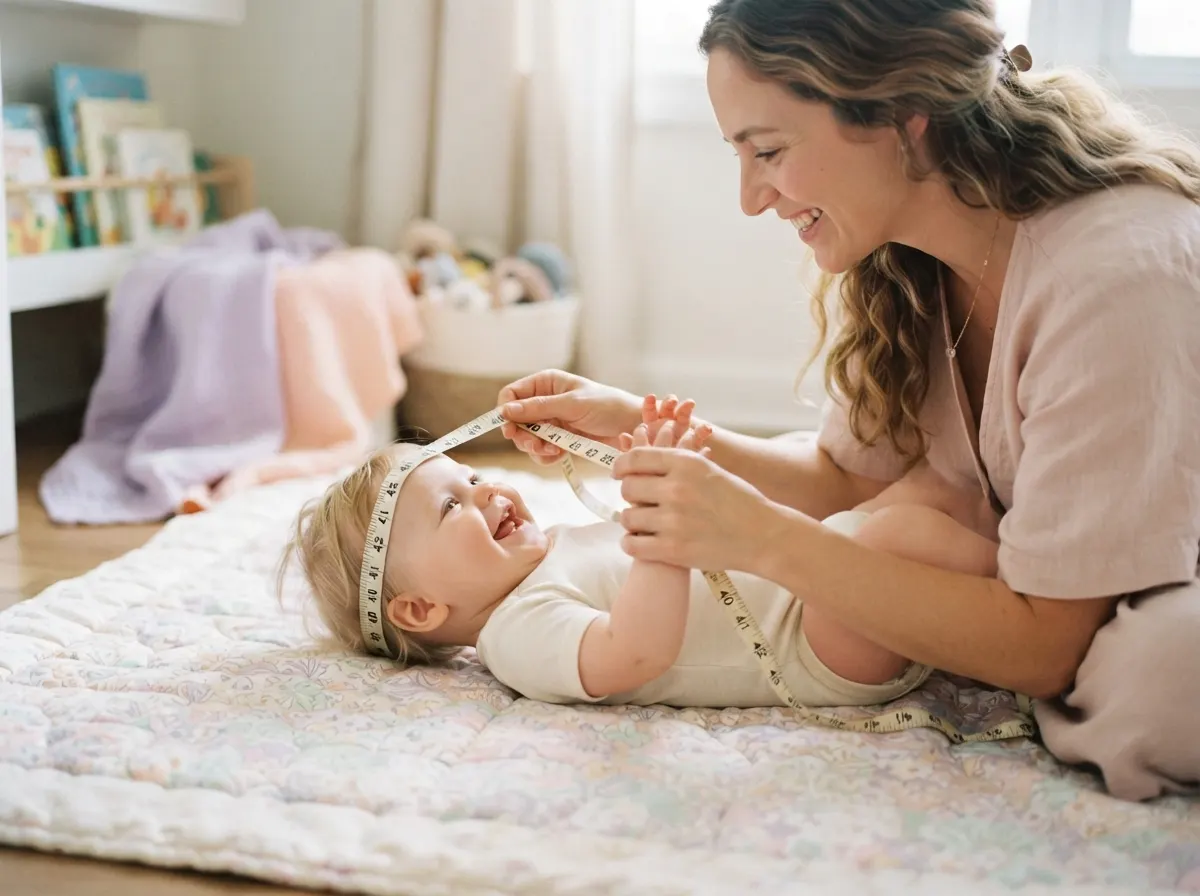
How do I measure my baby's head circumference?
You need a soft, non-stretchy tape measure, like a sewing tape.
- Sit your baby on your lap or lay them down when they are calm.
- Wrap the tape around the widest part of the head: just above the eyebrows and ears at the front, and around the most prominent part at the back.
- Keep the tape snug but not tight, and flat against the head.
- Take the measurement three times and use the largest number.
Hair, wriggling and where exactly you place the tape all affect the reading, so small differences are normal.
What should I do with my home measurements?
Home measurements are most useful as a loose trend between appointments. They are not a substitute for clinic checks.
- Use clinic numbers as your reference. Health professionals use calibrated scales and measuring boards, and they know how to read the results.
- Do not chase single readings. One odd number is far more likely to be a measuring error than a real change.
- Look at the curve. Growth charts are about the shape of the line over weeks and months. Our guide to growth percentiles explains why.
- Know what to expect. Our guide to weight gain in the first year shows typical WHO median weights by month.
If you want to see roughly where a measurement sits, you can enter it into our free baby growth calculator, which compares it with WHO data. Please treat any home result as a guide.
This article is educational, not medical advice. If something about your baby's growth or head size worries you, or a home reading seems very different from what you expected, talk to your doctor, health visitor or paediatrician rather than re-measuring again and again.
How often should a baby be measured?
There is no need to measure at home often. Your clinic or health visitor will suggest a schedule based on your baby's age and needs. In the early weeks, weigh-ins tend to be more frequent, then they space out as feeding and growth settle. Measuring more often than recommended rarely helps and can cause needless worry.
How can I keep all my baby's measurements in one place?
Most of us end up with numbers on appointment cards, in the red book, in phone notes and on scraps of paper. Putting them all in one place, with dates, makes the curve easy to see and easy to share at your next appointment.
Baby Growth Tracker Pro plots each weight on WHO growth charts with percentiles from birth to 5 years, and the Plus subscription adds length and head circumference charts. It uses corrected age for preterm babies, has a daily care log, and works offline with no account needed. Learn more on the Baby Growth Tracker page.
Quick tips for more reliable home measurements
- Same scales, same time of day, same clothing
- Before a feed rather than after
- Two people for length, every time
- A soft tape for the head, measured three times
- Write it down straight away with the date
- Compare with the clinic, not with other babies
Frequently asked questions
Can I trust my bathroom scales for my baby's weight?
Only as a rough guide. Bathroom scales are not designed for small weights, and subtracting two readings adds error. Clinic scales are the reference.
Why does my baby's length change between measurements?
Length is hard to measure because babies curl up and wriggle. Differences of a centimetre or more between attempts are common at home.
What tape should I use for head circumference?
A soft, non-stretchy tape, such as a sewing tape measure. Avoid metal tapes and anything stretchy.
Should I tell my health visitor about home measurements?
You can mention them, but they will usually re-measure. If a home reading worries you, contact them rather than measuring repeatedly.
Some links on this page go to Amazon. As an Amazon Associate we earn from qualifying purchases. It never changes the price you pay.