How much sleep does a baby need? Sleep hours by age, 0 to 5 years
How much sleep babies and toddlers need by age, typical naps, night waking, day and night confusion, a simple bedtime routine and sleep regressions.
Educational content only, not medical advice. Always talk to your doctor or health visitor about your child.
In this article
Babies aged 4 to 12 months need 12 to 16 hours of sleep in 24 hours, including naps, according to the American Academy of Sleep Medicine (AASM), whose guidance is endorsed by the American Academy of Pediatrics (AAP). Toddlers aged 1 to 2 need 11 to 14 hours, and children aged 3 to 5 need 10 to 13 hours. Newborns sleep the most, often around 14 to 17 hours, but they sleep in short stretches and vary a lot from baby to baby. Waking at night is normal for babies, especially in the first months.
This guide is educational, not medical advice. If you are worried about your baby's sleep, breathing or how sleepy they are during the day, talk to your doctor, health visitor or paediatrician.
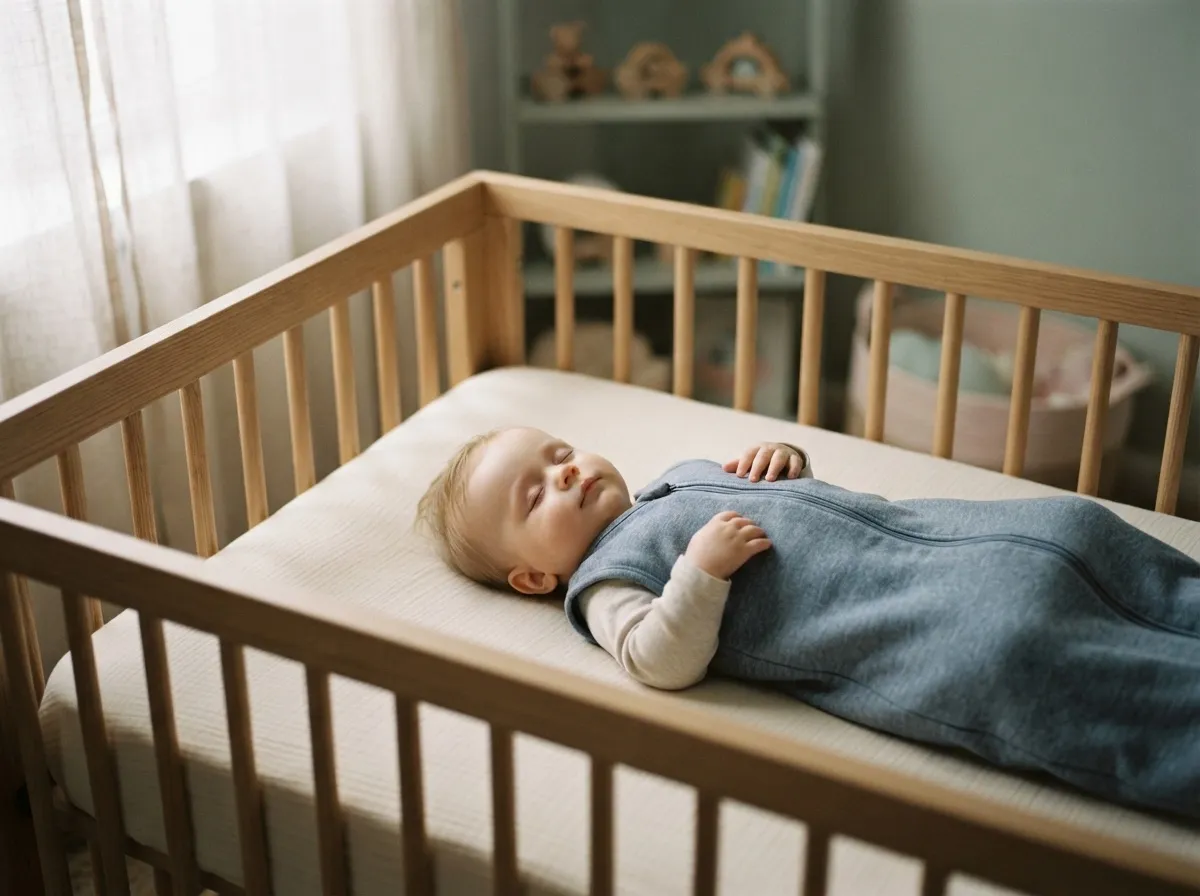
Before anything else: wherever and however long your baby sleeps, follow safe sleep advice. Put them on their back, on a firm, flat, separate surface with nothing loose in the cot, in your room for at least the first 6 months. Our safe sleep basics guide explains each step.
How many hours should a baby sleep by age?
These ranges are total sleep in 24 hours, with naps included.
| Age | Total sleep in 24 hours | Source |
|---|---|---|
| Newborn, 0 to 3 months | 14 to 17 hours | National Sleep Foundation, used by the CDC |
| Infant, 4 to 12 months | 12 to 16 hours | AASM, endorsed by the AAP |
| Toddler, 1 to 2 years | 11 to 14 hours | AASM, endorsed by the AAP |
| Preschool, 3 to 5 years | 10 to 13 hours | AASM, endorsed by the AAP |
| School age, 6 to 12 years | 9 to 12 hours | AASM, endorsed by the AAP |
The AASM recommendations start at 4 months, so there is no AASM range for younger babies. For 0 to 3 months, the CDC uses the National Sleep Foundation's range of 14 to 17 hours. Other sources give slightly different figures: the AAP's HealthyChildren.org says newborns sleep roughly 16 to 17 hours a day, and the NHS says most newborns sleep around 18 hours a day. All agree that newborns vary widely.
The NHS also gives rough totals for older babies: around 15 hours at 6 to 12 months for some babies, about 12 to 15 hours from 12 months, about 12 to 14 hours at 2 years, and about 12 hours at 3 to 5 years. These sit close to the AASM ranges.
A range is a guide, not a target. A baby who is feeding well, growing and mostly content when awake is usually getting enough sleep, even if they sit at the edge of a range.
How many naps does a baby need?
Nap patterns change a lot in the first years, and every baby is different. As a rough guide:
- 0 to 3 months. Newborns sleep round the clock, often for only 1 to 2 hours at a time, according to the AAP. There is no real nap schedule yet.
- 3 to 6 months. Sleep starts to organise into longer night stretches and more predictable daytime naps. The NHS says some babies sleep 5 to 8 hours or more at night by now, but not all.
- 6 to 12 months. Many babies take 1 to 3 daytime naps, and most of their sleep shifts to the night.
- 1 to 2 years. Most toddlers move from 2 naps to 1 during this time.
- 3 to 5 years. The NHS says some children still need a daytime nap. Others drop it altogether.
If your child's naps are getting shorter and bedtime is getting harder, it can be a sign they are ready to drop a nap.
Is it normal for my baby to wake up at night?
Yes. The NHS says newborns wake repeatedly at night for the first few months, mainly to feed. Their stomachs are small and they need milk often. Being too hot or too cold can also wake them.
The AAP says babies do not have regular sleep cycles until about 4 months. Even after that, waking is normal. The AAP notes it is normal for a 6 month old to wake during the night and fall back asleep after a few minutes.
"Sleeping through the night" means very different things for different families. Some babies sleep long stretches early, many do not, and both are normal. If your baby is still waking a lot after 6 months, the AAP suggests giving them a moment to resettle before you rush in, while still responding when they need feeding, a nappy (diaper) change or comfort.
How do I fix my baby's day and night confusion?
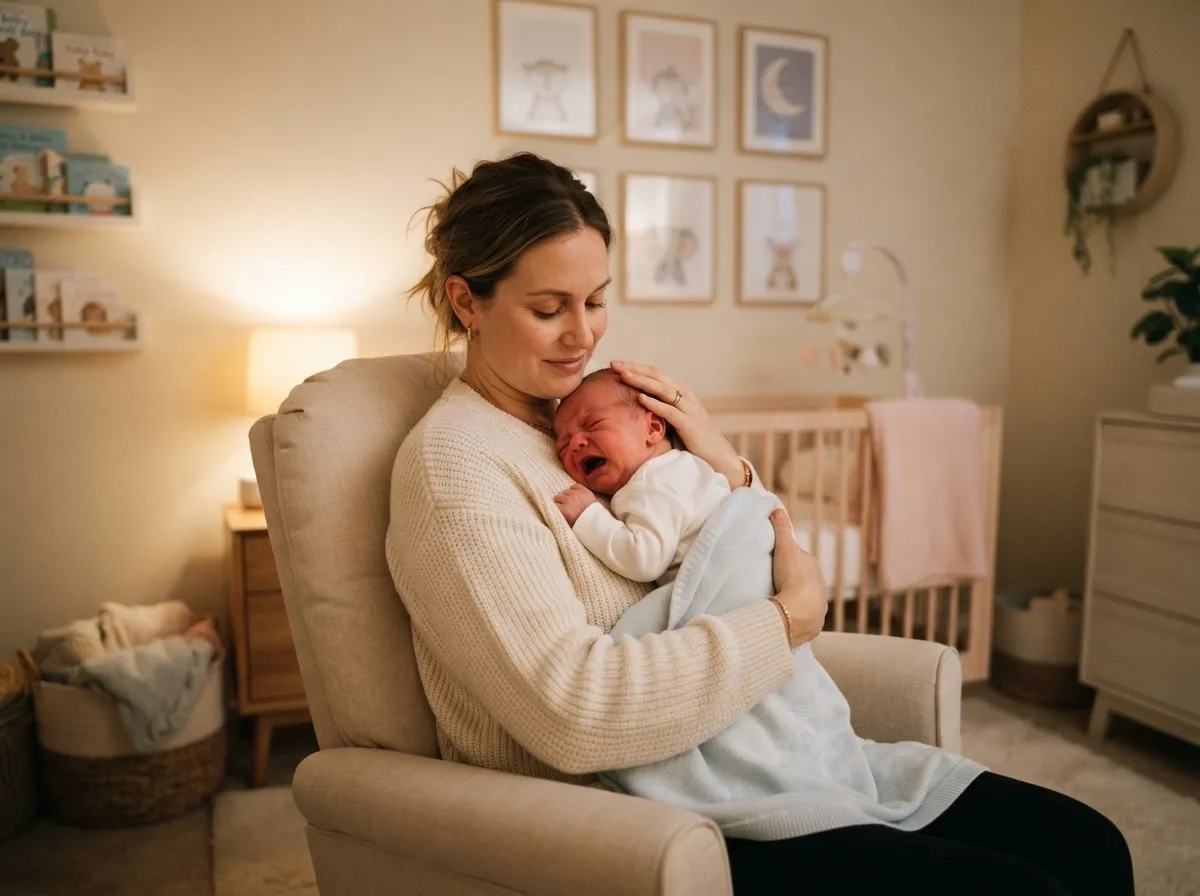
Some newborns sleep a lot during the day and are wide awake at night. The AAP calls this day-night reversal and says it is temporary, though there is no quick fix. Clear differences between day and night help:
During the day (NHS and AAP):
- Open the curtains and let in natural light
- Talk and play with your baby when they are awake
- Do not worry about normal household noise during naps
At night:
- Keep lights low and your voice quiet
- Keep feeds and nappy changes calm and boring
- Put your baby back down soon after feeding and changing
- Avoid unnecessary nappy changes and play
Warm night light
A soft amber glow for night feeds without waking everyone up.
A dim night light lets you feed and change your baby without switching on bright overhead lights.
What is a good bedtime routine for a baby?
A short, predictable routine helps your baby learn that sleep is coming, and it can grow with your child. The NHS suggests a routine along these lines:
- A bath
- Night clothes and a fresh nappy
- Into the cot or bed
- A bedtime story
- Dim the lights
- A goodnight kiss and cuddle
- A lullaby or a wind-up musical mobile
- Brushing teeth, once they have any
Pick the steps that suit your family, keep it short and calm, and do it in the same order each night.
From around 4 months, the AAP suggests putting your baby down when they are drowsy but not yet asleep. This helps them learn to fall asleep on their own, which can make it easier for them to settle again when they wake at night.
Wearable sleep sack
Keeps baby warm without loose blankets in the cot. Check the TOG for your room.
A well-fitting baby sleeping bag with no hood keeps your baby warm without loose blankets. Choose one suited to the room temperature. The NHS suggests a room temperature of 16 to 20°C (61 to 68°F).
Are sleep regressions real?
"Sleep regression" is a popular term, not a medical one, and official bodies such as the AAP and NHS do not define it. What is true is that babies' sleep changes as they develop. The AAP says regular sleep cycles appear at around 4 months, which is when many parents notice sleep becoming lighter or more broken for a while.
Sleep often gets temporarily worse around:
- Big developmental leaps, like rolling, sitting, crawling and walking. See our baby milestones guide.
- Illness, teething or travel. Our teething guide covers what is normal.
- Changes in routine, such as starting nursery or dropping a nap
These phases usually pass in a few weeks if you keep your routine steady. If your baby suddenly sleeps much more than usual, is hard to wake, snores loudly, pauses in their breathing or seems unwell, talk to your doctor. If your baby is floppy, cannot be woken or is struggling to breathe, call your emergency number.
How can I track my baby's sleep?
Writing down when your baby sleeps can help you spot their natural rhythm, plan naps, and answer questions at check-ups.
Baby Growth Tracker Pro logs sleep, feeds, nappies, growth and milestones in a tap, and works offline. You can find all our care guides in the baby care hub.
Frequently asked questions
How much sleep does a 6 month old need?
The AASM, endorsed by the AAP, recommends 12 to 16 hours in 24 hours for babies aged 4 to 12 months, including naps. Many 6 month olds sleep a long stretch at night and take a few daytime naps.
How many hours should a newborn sleep?
Newborns usually sleep somewhere around 14 to 17 hours a day, though the NHS says around 18 hours is common and every baby is different. They sleep in short stretches, often only 1 to 2 hours at a time.
When do babies sleep through the night?
There is no fixed age. The NHS says some babies sleep 5 to 8 hours or more at night between 3 and 6 months, but many do not, and night waking is still normal later in the first year.
Does a 3 year old still need a nap?
Some do and some do not. The AASM recommends 10 to 13 hours in 24 hours for children aged 3 to 5, and naps count towards that total.
Is the 4 month sleep regression real?
It is not a medical diagnosis, but many babies' sleep does change around 4 months, when the AAP says regular sleep cycles develop. Keeping a steady routine usually helps, and it tends to pass.
Some links on this page go to Amazon. As an Amazon Associate we earn from qualifying purchases. It never changes the price you pay.