Safe sleep basics for babies, what the AAP and NHS recommend
Safe sleep for babies, following AAP and NHS guidance. Back to sleep, a clear cot, room sharing, room temperature and when to stop swaddling.
Educational content only, not medical advice. Always talk to your doctor or health visitor about your child.
In this article
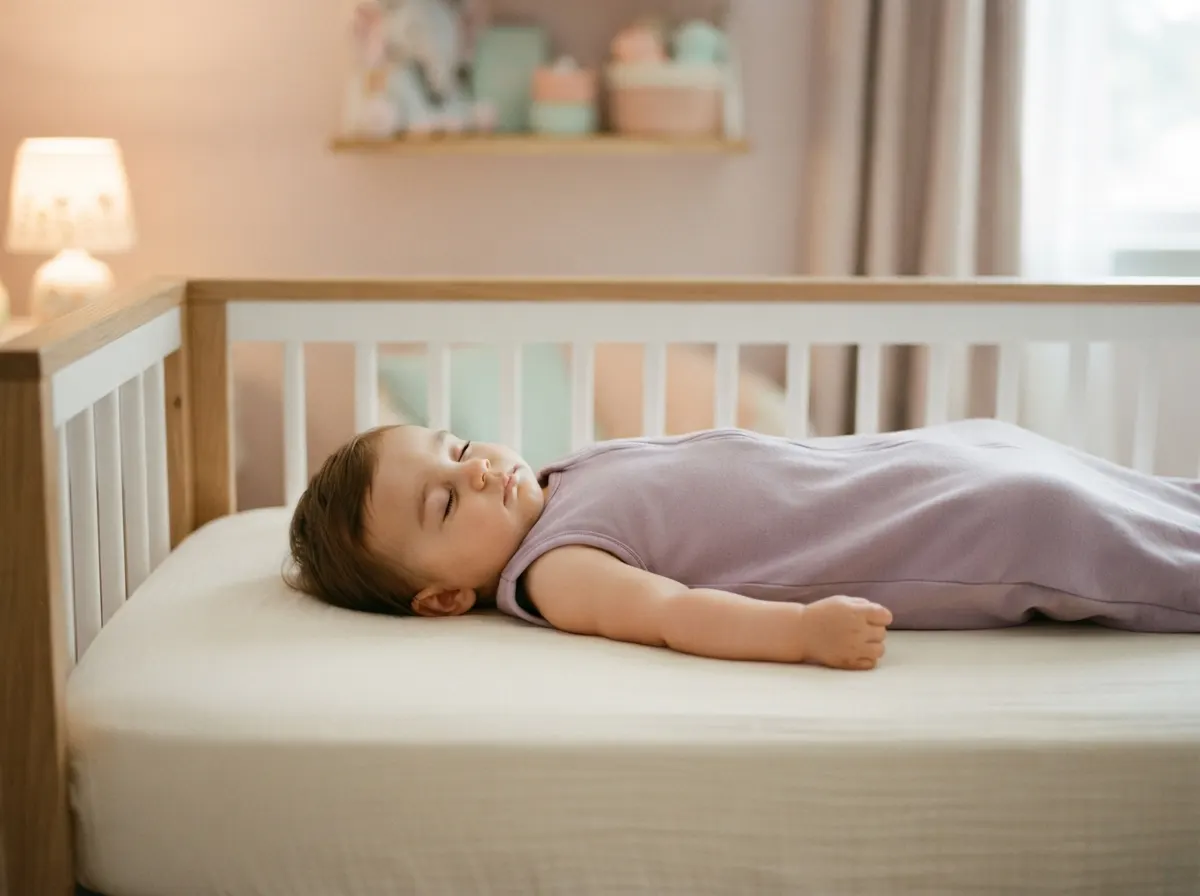
To keep your baby as safe as possible while they sleep, put them on their back for every sleep, on a firm, flat, separate sleep surface with nothing loose in the cot, ideally in the same room as you for at least the first 6 months. Keep them from getting too hot, keep their head uncovered, keep your home smoke free, and stop swaddling as soon as your baby shows signs of trying to roll. This is the core of current safe sleep advice from the American Academy of Pediatrics (AAP) and the NHS.
These steps are about reducing the risk of sudden infant death syndrome (SIDS) and sleep accidents. No product, gadget or app can prevent SIDS, and none of the products mentioned here should be seen as doing so. This article is educational, not medical advice. For questions about your own baby, talk to your doctor, health visitor or paediatrician.
What is the safest way for a baby to sleep?
On their back, for every sleep
Place your baby on their back for every sleep, day and night, including naps. Both the AAP and the NHS are clear on this. Babies placed on their backs are not more likely to choke.
The NHS also recommends the "feet to foot" position: place your baby with their feet touching the end of the cot or Moses basket, so they cannot wriggle down under any covers.
Once your baby can roll from back to tummy and back again on their own, you do not need to keep turning them over during the night. Keep putting them down on their back at the start of every sleep.
On a firm, flat, separate surface
Your baby should sleep on a firm, flat mattress in a cot, crib or Moses basket that meets current safety standards, with a fitted sheet. The AAP specifically advises against inclined sleepers and sleeping on any surface that is tilted.
- The mattress should fit the cot with no gaps around the edges.
- It should be clean, dry and in good condition.
- Car seats, prams, swings and bouncers are not for routine sleep. If your baby falls asleep in one, move them to a firm, flat surface when you can.
- Never sleep with your baby on a sofa or armchair. This is one of the highest-risk situations.
Nothing loose in the cot
Keep the sleep space clear:
- No pillows, duvets, quilts or cot bumpers
- No soft toys or comforters
- No positioners, wedges or rolled towels
- No loose blankets around the head
If you use a blanket, tuck it in firmly no higher than your baby's shoulders, with their feet at the foot of the cot. A well-fitting baby sleeping bag is another option many parents use, as long as it is the right size and has no hood. The AAP advises against weighted sleep sacks and weighted swaddles.
Wearable sleep sack
Keeps baby warm without loose blankets in the cot. Check the TOG for your room.
Should my baby sleep in my room?
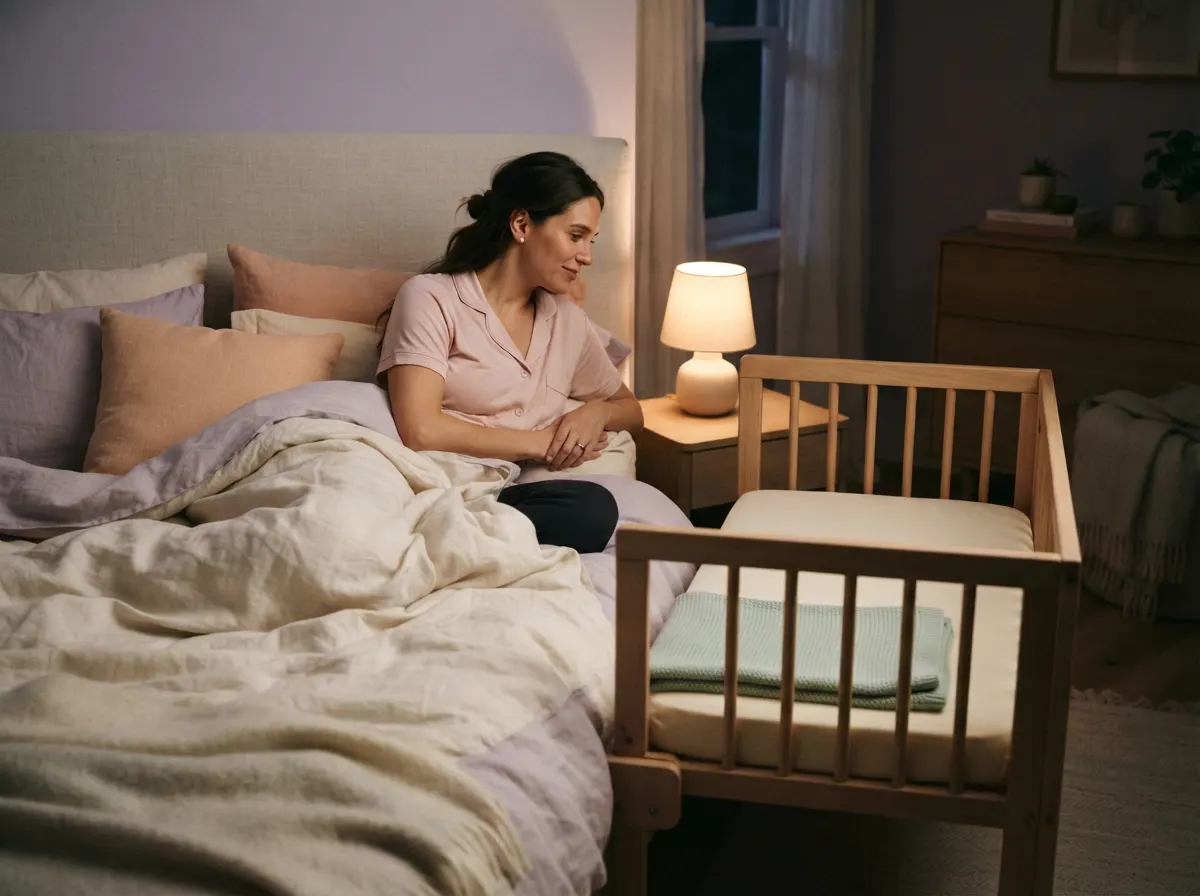
Both the AAP and the NHS recommend that your baby sleeps in a separate cot or Moses basket in the same room as you, ideally for at least the first 6 months. That includes daytime naps.
Room sharing is different from bed sharing. The AAP recommends against bed sharing. The NHS recognises that many parents do share a bed at some point, and gives advice on making it safer. It says never to share a bed with your baby if you or your partner smoke, have drunk alcohol, have taken drugs or medicine that makes you drowsy, or are extremely tired, or if your baby was born premature or at a low birth weight. If you are thinking about bed sharing, ask your health visitor or doctor for advice.
How warm should a baby's room be?
Overheating increases risk, so it is worth keeping an eye on room temperature and layers.
- The NHS suggests a room temperature of between 16 and 20°C.
- Do not cover your baby's head while they sleep, and take off hats and extra layers when you come indoors.
- To check if your baby is too hot, feel their chest or the back of their neck. If they are sweaty, remove a layer.
- Hands and feet often feel cool, which is normal and not a good guide.
- Keep the cot away from radiators, heaters and direct sunlight.
Does smoking affect safe sleep?
Yes. Smoking during pregnancy and smoke around your baby after birth both increase the risk of SIDS. Keep your home and car smoke free, and do not let anyone smoke near your baby. If you smoke, your doctor, midwife or pharmacist can help you find support to stop.
When should I stop swaddling my baby?
Swaddling is optional. If you swaddle, use thin material, wrap firmly but not tightly, keep it below the shoulders and loose around the hips so the legs can bend up and out, and always place your baby on their back.
Stop swaddling as soon as your baby shows signs of trying to roll, which often happens around 3 to 4 months but can be earlier. A swaddled baby who rolls onto their tummy may not be able to roll back. You can read more about when rolling usually develops in our guide to baby milestones.
Zip-up swaddle
For newborns who startle themselves awake. Stop once baby starts to roll.
What else does the AAP recommend?
A few other points from the AAP's 2022 safe sleep guidance:
- Breastfeeding is associated with a lower risk of SIDS. Any amount helps.
- Offer a dummy (pacifier) at sleep times. If you are breastfeeding, the AAP suggests waiting until feeding is well established. Do not force it, and do not attach it to clothing with a cord.
- Avoid products marketed to reduce SIDS risk. The AAP says they have not been shown to do so. Home monitors should not be used as a way to reduce SIDS risk.
- Supervised tummy time while your baby is awake helps build strength.
- Avoid alcohol and drugs around pregnancy and when caring for your baby.
Safe sleep checklist
Before you leave your baby to sleep, check:
- On their back, feet to the foot of the cot
- Firm, flat mattress with a fitted sheet
- Nothing else in the cot
- Head uncovered, not too warm
- In your room for at least the first 6 months
- Smoke-free home
- Not swaddled if they are showing signs of rolling
If you are getting ready for a new baby, our newborn essentials checklist covers what you need for a safe sleep space, and the sleep section of our shop gathers the basics in one place.
How can I keep track of my baby's sleep?
Tracking sleep will not make it safer, but a simple log can help at appointments.
Baby Growth Tracker Pro has a daily care log for sleep, feeds, nappies and temperature, logged in one tap. It also includes temperature guidance by age, a vaccine schedule planner and 100 answered questions for new parents. It works offline and needs no account. Find out more on the Baby Growth Tracker page.
Frequently asked questions
What if my baby rolls onto their tummy during sleep?
Always put your baby down on their back. Once they can roll both ways on their own, guidance says you do not need to keep turning them back over. Stop swaddling once they show signs of rolling.
Can my baby sleep in a car seat?
Car seats are for travel, not for routine sleep. If your baby falls asleep in one, move them to a firm, flat surface once you arrive.
Are baby sleeping bags safe?
A sleeping bag of the right size, with no hood, and suited to the room temperature is a common choice. Avoid weighted sleeping bags, which the AAP advises against.
Does any product prevent SIDS?
No. No product has been shown to prevent SIDS. Following safe sleep guidance is the best way to reduce the risk.
Some links on this page go to Amazon. As an Amazon Associate we earn from qualifying purchases. It never changes the price you pay.