Monthly baby essentials list (and how to spend less on them)
The baby things you rebuy every month, from nappies and wipes to cream and detergent, plus simple ways to save with bulk buys, subscriptions and sizing.

In this article
- What baby items do you need to buy every month?
- How many nappies does a baby use a month?
- How can I save money on nappies?
- Is Subscribe and Save worth it for baby essentials?
- Which baby products are worth buying in bulk?
- What else helps keep the monthly baby budget down?
- Keeping track without the mental load
The things you rebuy every month with a baby are mostly the same short list: nappies, wipes, nappy cream, laundry detergent, baby wash, and, depending on how you feed, formula, breast pads or bottle brushes. The biggest savings come from buying the high-use items in bulk, using a repeat delivery service for the ones you never want to run out of, and not overbuying a nappy size your baby is about to grow out of.
Here is the full monthly list, how quickly each item tends to run out, and the practical ways to keep the bill down.
What baby items do you need to buy every month?
This is the list most families end up with in the first year or two. You will not need all of it every month, but these are the things that keep disappearing.
- Nappies (diapers). The biggest regular cost by far.
- Wipes. Used for every change, plus sticky hands and faces later on.
- Nappy rash cream. A barrier cream, one tube at home and one in the changing bag.
- Baby laundry detergent. Babies create a surprising amount of washing.
- Gentle baby wash. Lasts longer than you think, especially in the early months.
- Nappy disposal bags. Handy when you are out or for the really messy ones.
- Feeding extras. Formula if you use it, breast pads and nipple cream if you are breastfeeding, and bottle brushes, which wear out.
- Dribble bibs. Once teething starts, you may go through several a day.
You can see all of these together in the monthly essentials section of our shop.
How many nappies does a baby use a month?
It changes with age. Newborns commonly use 8 to 12 nappies a day, so a month can easily be well over 250 nappies. As babies get older, the number of changes per day usually drops, but you will still be buying nappies regularly until potty training.
That is why nappies are the first place to look for savings.
Sensitive water wipes
Mostly water, fragrance free, kind to newborn skin. Buy the multipack.
How can I save money on nappies?
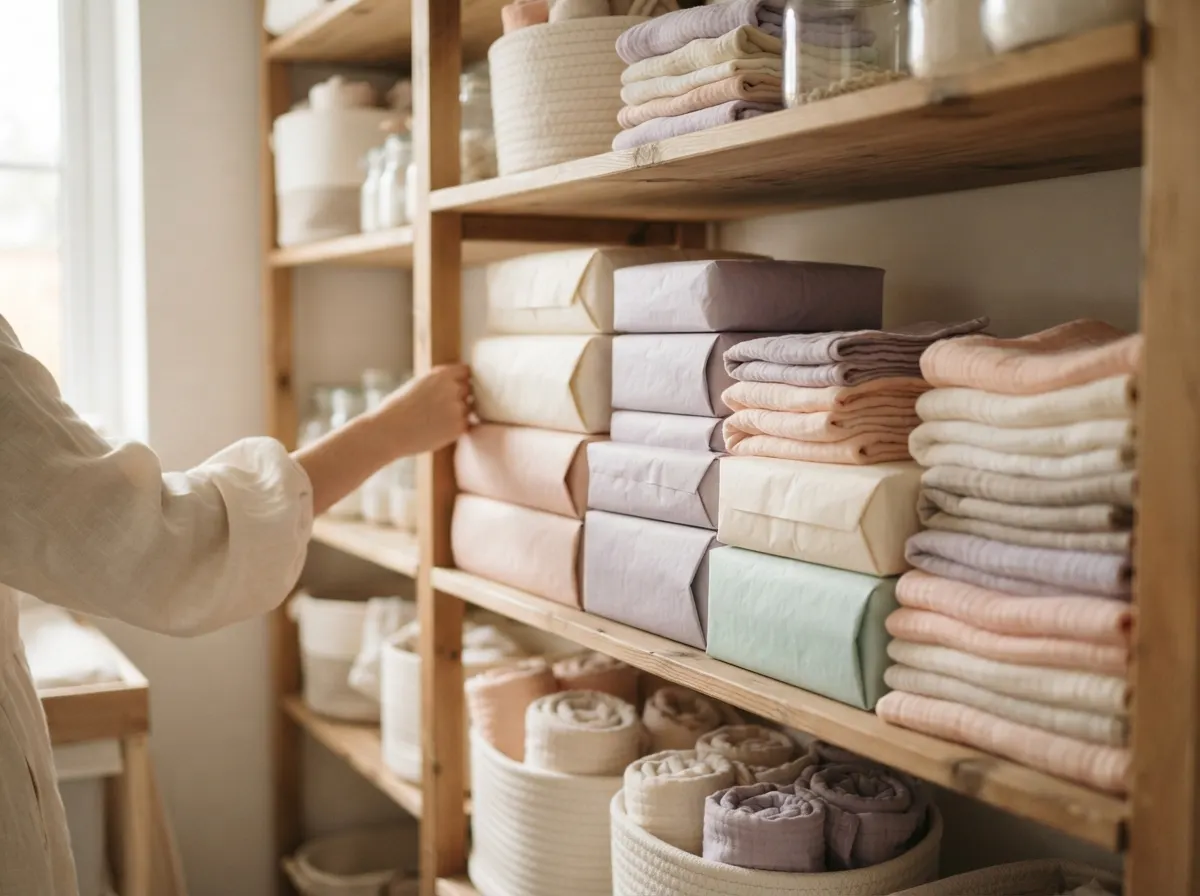
- Buy the bigger box. Larger packs nearly always cost less per nappy than small packs. Compare the price per nappy, not the price per pack.
- Do not overbuy one size. Babies move up sizes based on weight, and some move quickly in the first months. Buy one big box at a time rather than stockpiling the current size.
- Size up at the right time. Frequent leaks, red marks on the legs or tummy, or tabs that only just reach are common signs it is time for the next size. Check the weight range on the pack.
- Try a supermarket or own brand. Many parents find cheaper nappies work just as well for daytime and keep a premium brand for nights. Every baby is different, so test a small pack first.
- Consider reusables for part of the day. Some families use cloth nappies at home and disposables when out. It costs more upfront but can save over time, especially for a second child.
Keeping an eye on your baby's weight helps you predict when the next size is coming. Our first year weight gain guide shows how quickly the typical baby grows each month.
Is Subscribe and Save worth it for baby essentials?
Amazon Subscribe and Save, and similar repeat delivery services from supermarkets and pharmacies, can work well for baby basics. You choose a product and a delivery frequency, and it arrives automatically.
What to look for:
- A discount on the repeat order. The size of the discount varies by product and by country, so check the actual price on the day rather than assuming it is the cheapest option.
- Flexibility. Choose a service where you can skip a delivery, change the date or cancel easily. Babies change sizes and habits fast.
- The right frequency. Start with a longer gap than you think you need. It is easier to bring a delivery forward than to store three boxes of the wrong nappy size.
- Not locking in nappy sizes. Subscriptions work best for things that do not change size, like wipes, cream, detergent and wash. For nappies, review the size every month.
Baby laundry detergent
Free of dyes and perfumes for tiny clothes, muslins and sheets.
Which baby products are worth buying in bulk?
Good candidates for bulk buying are items that keep well, do not change size, and that you use every day:
- Wipes (check the packs stay sealed so they do not dry out)
- Laundry detergent
- Nappy cream
- Nappy disposal bags
- Baby wash
Less good candidates:
- Nappies in a size your baby is close to outgrowing
- Formula before you know your baby is happy on it
- Anything with a short use-by date once opened
What else helps keep the monthly baby budget down?
A few habits make a real difference over a year:
- Track what you actually use. For a couple of weeks, note how many nappies and wipes you go through. You will buy more accurately.
- Use less product. A thin layer of barrier cream is usually enough. Baby wash is concentrated, and newborns often only need water.
- Rotate, do not multiply. Two or three bottle brushes in rotation last longer than replacing one constantly.
- Accept hand-me-downs for non-consumables. Clothes, toys and books from friends free up money for the things you must buy new.
- Check the basics list before every shop. It stops the expensive top-up trips at 9 pm.
If you are just starting out, our newborn essentials checklist covers the one-off items you need for the first 6 weeks.
Nappy rash cream
A zinc barrier cream for red bottoms. One tube in the changing bag, one at home.
Keeping track without the mental load
Knowing how many nappies your baby uses, and how their weight is changing, makes buying the right size and amount much easier. It also helps at health visitor appointments.
Baby Growth Tracker Pro has a daily care log for feeds, nappies, sleep and temperature that you fill in with one tap, plus WHO growth charts for weight. It also has reminders and a vaccine schedule planner. It works offline and needs no account. Learn more on the Baby Growth Tracker page.
Frequently asked questions
How much does a baby cost per month in consumables?
It varies a lot by country, brand and whether you use formula or reusable nappies. The best way to know is to track one month of nappies, wipes and feeding supplies, then look for savings on the biggest items.
Should I buy nappies in bulk before the baby arrives?
A box or two of newborn and size 1 is sensible. Avoid stockpiling large amounts of one size, as you do not yet know how big your baby will be or how fast they will grow.
Are water wipes better than regular wipes?
Many parents choose fragrance-free or water-based wipes for newborn skin. If your baby's skin is irritated, talk to your health visitor, pharmacist or doctor.
How often should I replace bottle brushes?
When the bristles start to splay or look worn, usually every month or two with daily use. Worn brushes do not clean as well.
Some links on this page go to Amazon. As an Amazon Associate we earn from qualifying purchases. It never changes the price you pay.