Starting solids, a simple guide for around 6 months
When to start solids, signs your baby is ready, first foods, iron-rich foods, allergens, choking hazards and the foods to avoid before 12 months.
Educational content only, not medical advice. Always talk to your doctor or health visitor about your child.
In this article
- When should I start my baby on solid food?
- What are the signs my baby is ready for solids?
- What are the best first foods for a baby?
- Why are iron-rich foods important for babies?
- When should I introduce allergens to my baby?
- What foods are choking hazards for babies?
- What foods should a baby not eat before 12 months?
- How can I keep track of my baby's eating?
Most babies are ready to start solid foods at around 6 months, when they can sit up and hold their head steady, pick up food and bring it to their mouth, and swallow food rather than pushing it back out. Start with simple foods, include iron-rich foods early, introduce common allergens one at a time rather than delaying them, avoid choking hazards like whole grapes and whole nuts, and do not give honey before 12 months or add salt or sugar. Milk stays the main part of your baby's diet for a while yet.
This guide follows current advice from the WHO, the NHS and the American Academy of Pediatrics. It is educational, not medical advice, so please talk to your doctor, health visitor or paediatrician about your own baby, especially if they were born early, have eczema or have a known allergy.
When should I start my baby on solid food?
The WHO and the NHS recommend introducing solid foods at around 6 months, alongside continued breastfeeding or formula. Before this, breast milk or first infant formula provides all the nutrition a healthy baby needs.
Starting around 6 months gives your baby time to develop the skills they need to eat safely. If you are thinking of starting earlier, or your baby was born prematurely, talk to your health visitor or doctor first.
What are the signs my baby is ready for solids?
The NHS describes three signs that usually appear together at around 6 months. Your baby can:
- Stay in a sitting position and hold their head steady.
- Coordinate their eyes, hands and mouth, so they can look at food, pick it up and put it in their mouth.
- Swallow food, rather than pushing it back out with their tongue.
Some things are often mistaken for readiness, like chewing fists, waking more at night or wanting extra milk feeds. These are normal baby behaviours and are not, on their own, signs that your baby needs solid food.
What are the best first foods for a baby?
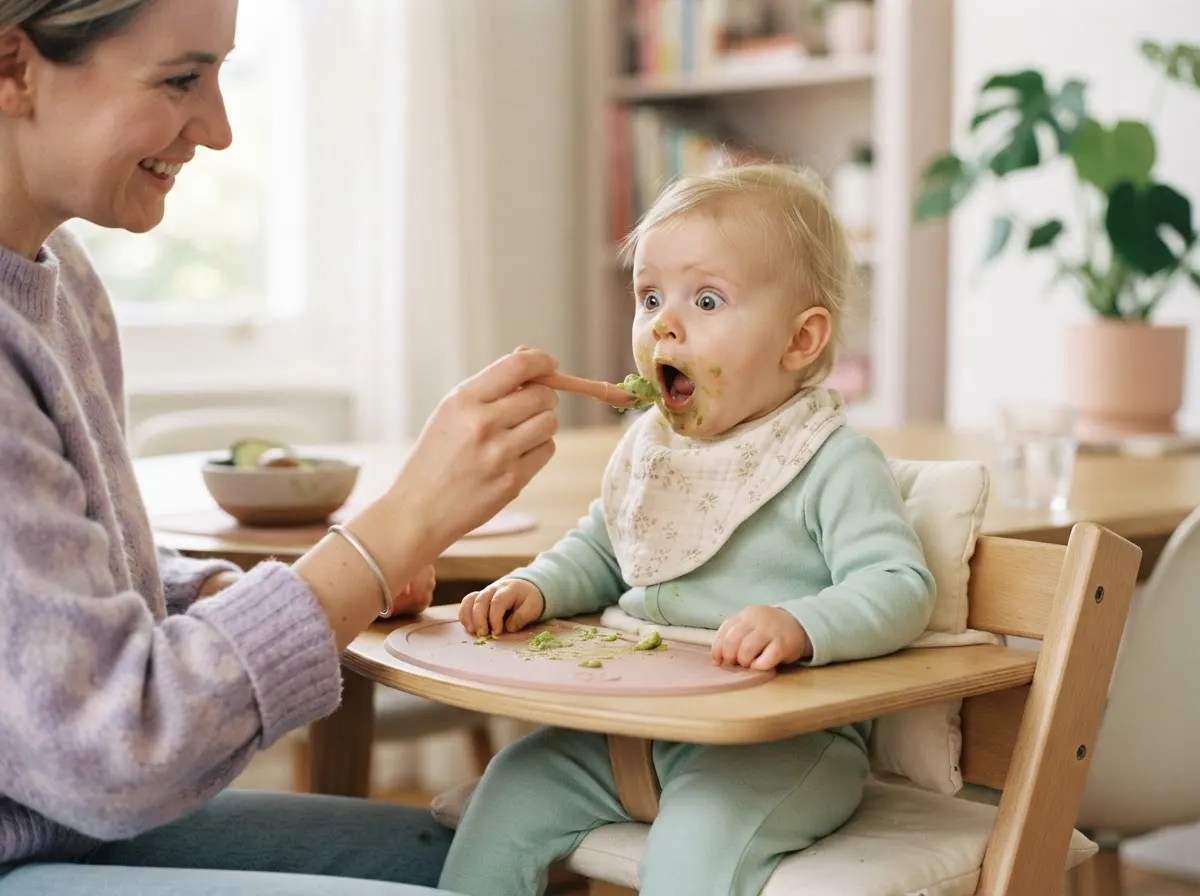
First foods can be smooth purees, mashed food or soft finger foods. Many families mix spoon feeding with finger foods, and some follow baby-led weaning. Both are fine.
Good first foods include:
- Vegetables: broccoli, cauliflower, parsnip, carrot, sweet potato, cooked until soft
- Fruit: banana, avocado, soft cooked apple or pear
- Grains: baby rice, oats, soft pasta
- Proteins: well-cooked lentils, beans, eggs, fish and meat
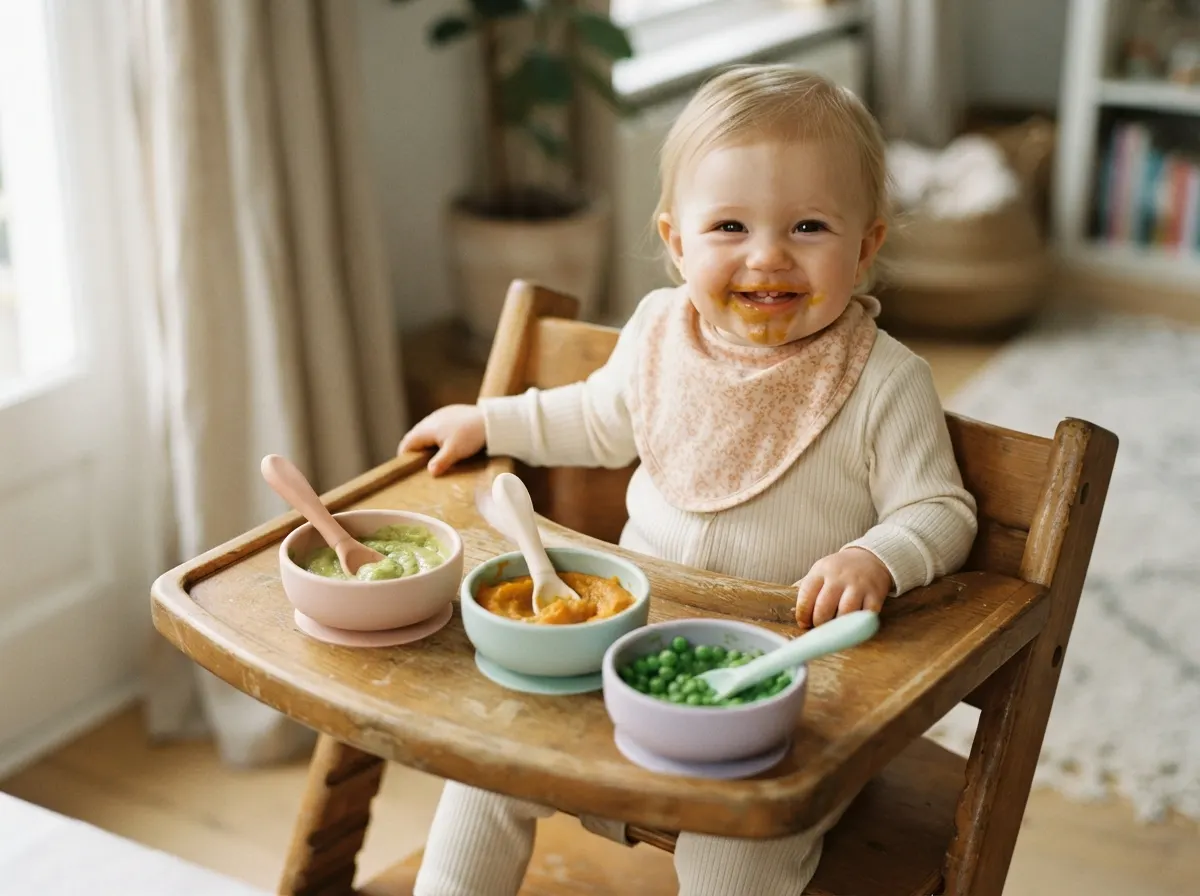
Start with a few spoonfuls or pieces once a day and let your baby set the pace. In the early weeks, a lot will end up on the floor, the bib and the high chair, and that is part of learning.
Suction plate and bowl
Sticks to the high chair tray so dinner stays on the table.
Why are iron-rich foods important for babies?
Around 6 months, the iron your baby stored before birth starts to run lower, so iron from food becomes important. Try to include iron-rich foods often:
- Meat and fish
- Eggs, well cooked
- Beans, lentils and chickpeas
- Iron-fortified baby cereals
- Dark green vegetables
Pairing iron-rich plant foods with foods that contain vitamin C, like fruit or vegetables, helps the body absorb the iron.
When should I introduce allergens to my baby?
Current UK and US guidance says there is no need to delay common allergenic foods. Introduce them from around 6 months as part of your baby's diet, one at a time, in small amounts, and watch for any reaction.
Common allergens include:
- Eggs (well cooked)
- Peanuts and tree nuts, given as smooth nut butter or ground, never whole
- Cow's milk in food, such as yoghurt or in cooking
- Wheat and other foods containing gluten
- Fish and shellfish
- Soya and seeds
Once a food has been introduced and tolerated, keep offering it regularly as part of your baby's usual diet.
If your baby has eczema, especially if it is severe, or already has a known food allergy, or there is a strong family history of allergies, talk to your doctor or health visitor before introducing allergenic foods. They may suggest a particular plan. If your baby ever has signs of a severe reaction, such as swelling of the face or lips, difficulty breathing, or becoming floppy or pale, call emergency services immediately.
What foods are choking hazards for babies?
Babies are still learning to chew and swallow. These foods are common choking hazards and need to be avoided or prepared safely:
- Whole grapes, cherry tomatoes and similar small round foods. Cut them lengthways into quarters.
- Whole nuts and peanuts. Do not give whole nuts to young children. Use smooth nut butters or ground nuts instead.
- Popcorn, hard sweets and boiled sweets.
- Hard raw vegetables and fruit, like raw carrot or apple. Cook until soft, or grate.
- Sausages and hot dogs, unless cut into thin strips, not rounds.
- Chunks of meat or cheese that are hard to chew.
Always stay with your baby when they are eating, and make sure they are sitting upright. Learning to gag is a normal part of eating, but choking is different and needs immediate action. Many parents find a baby first aid course reassuring.
What foods should a baby not eat before 12 months?
- Honey. Do not give honey before 12 months. It can contain bacteria that cause infant botulism, a rare but serious illness.
- Added salt. Babies' kidneys cannot cope with much salt. Do not add salt to your baby's food, and avoid salty foods like stock cubes, bacon and crisps.
- Added sugar. Avoid adding sugar and limit sugary foods and drinks.
- Cow's milk as a main drink. It can be used in cooking from around 6 months, but should not be your baby's main drink before 12 months.
- Rice drinks are not suitable for babies and young children.
Water can be offered in small sips from an open or free-flow cup with meals from around 6 months.
Open or straw training cup
For learning to drink water with meals from about 6 months.
How can I keep track of my baby's eating?
In the first weeks of solids, it helps to note new foods, especially allergens, so you can spot any patterns. A record of feeds and weight is also useful at health visitor appointments. Our guide to weight gain in the first year explains how growth typically changes once solids begin.
Baby Growth Tracker Pro has a daily care log for feeds, nappies, sleep and temperature, plus WHO growth charts for weight from birth to 5 years. It also includes 100 answered questions for new parents and works offline with no account needed. See the Baby Growth Tracker page.
When you are ready to shop, the feeding section of our shop has suction plates, soft spoons and easy-clean high chairs. And if you are still building your baby kit, our newborn essentials checklist lists the things you can leave until now.
Frequently asked questions
Can I start solids at 4 months?
The WHO and NHS recommend around 6 months. If you are thinking of starting earlier, talk to your health visitor or doctor first.
How much should my baby eat at first?
Just a few spoonfuls or pieces once a day. Let your baby lead, and gradually build up to three meals a day over the following months.
Is gagging normal when starting solids?
Gagging is common and is part of how babies learn to move food around their mouths. Choking is silent or involves struggling to breathe and needs immediate action.
When can my baby have peanut butter?
Smooth peanut butter can usually be introduced from around 6 months. If your baby has eczema or a known allergy, talk to your doctor first. Never give whole nuts.
Some links on this page go to Amazon. As an Amazon Associate we earn from qualifying purchases. It never changes the price you pay.