8 easy science experiments for kids using kitchen ingredients
Eight easy kitchen science experiments for kids aged 5 to 10, with what you need, simple steps and the science explained in one line.
In this article
You can do brilliant science with things already in your kitchen. Milk and food colouring, a baking soda volcano, rainbow walking water, dancing raisins, oobleck, red cabbage colour changes, a floating egg and a static balloon all work with everyday ingredients and take less than half an hour. Each one below has a short list of what you need, simple steps, and the science in one line so you can answer the inevitable "but why?".
These suit children aged about 5 to 10. Younger children can join in with help. Please have an adult supervise every experiment, keep ingredients away from eyes and mouths, and cover the table, because the best science is usually a bit messy.
What are some easy science experiments to do at home?
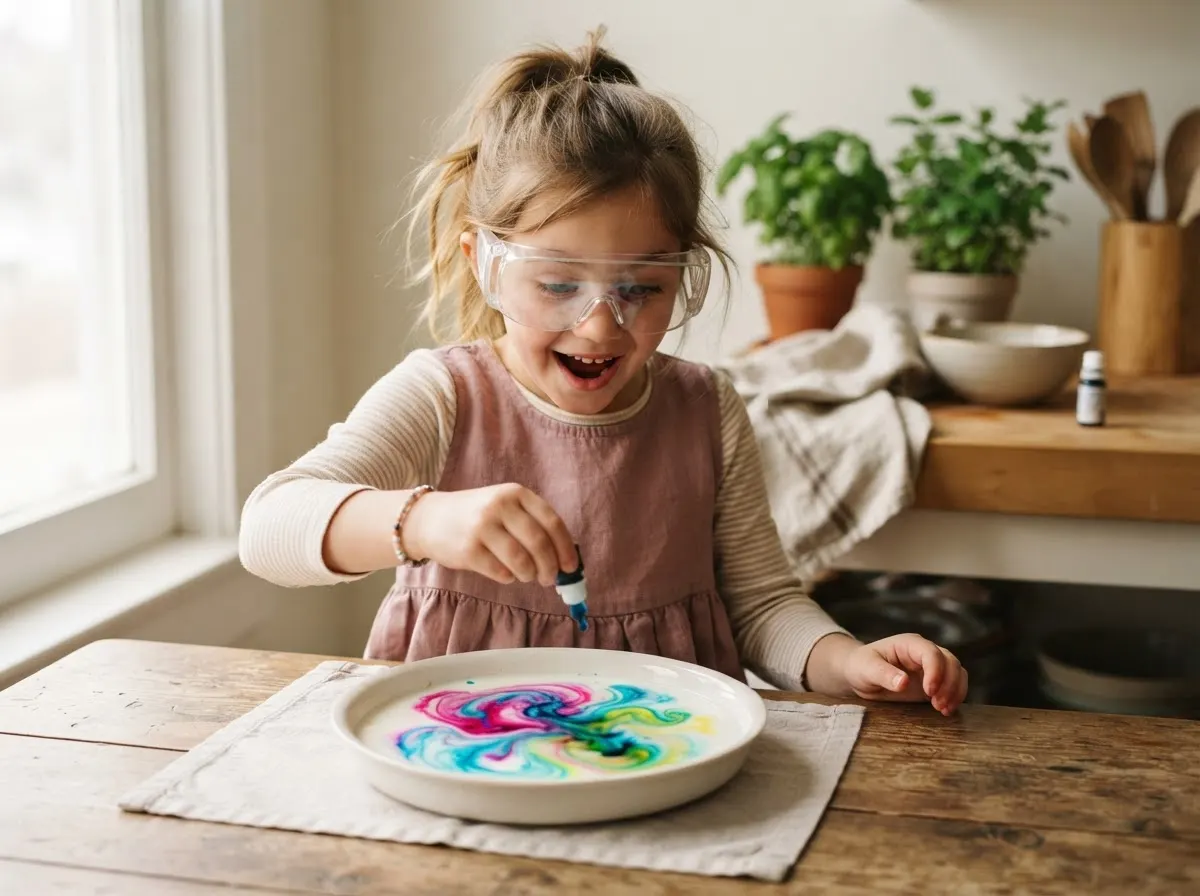
1. Magic milk swirls
You need: a shallow plate, whole milk, a few drops of food colouring, washing-up liquid, cotton buds.
Steps:
- Pour a thin layer of milk onto the plate.
- Add drops of different food colouring near the middle.
- Dip a cotton bud in washing-up liquid and touch it to the centre of the milk.
- Watch the colours burst and swirl.
The science: washing-up liquid breaks the milk's surface tension and grabs onto the fat, so the milk moves and carries the colours with it.
2. Baking soda volcano
You need: a small bottle or cup, bicarbonate of soda (baking soda), vinegar, a squirt of washing-up liquid, red food colouring, a tray.
Steps:
- Stand the bottle on a tray and add two spoons of bicarbonate of soda.
- Add a squirt of washing-up liquid and a few drops of colouring.
- Pour in vinegar and step back.
The science: vinegar is an acid and bicarbonate of soda is a base, and when they react they make carbon dioxide gas, which bubbles up as foam.
3. Rainbow walking water
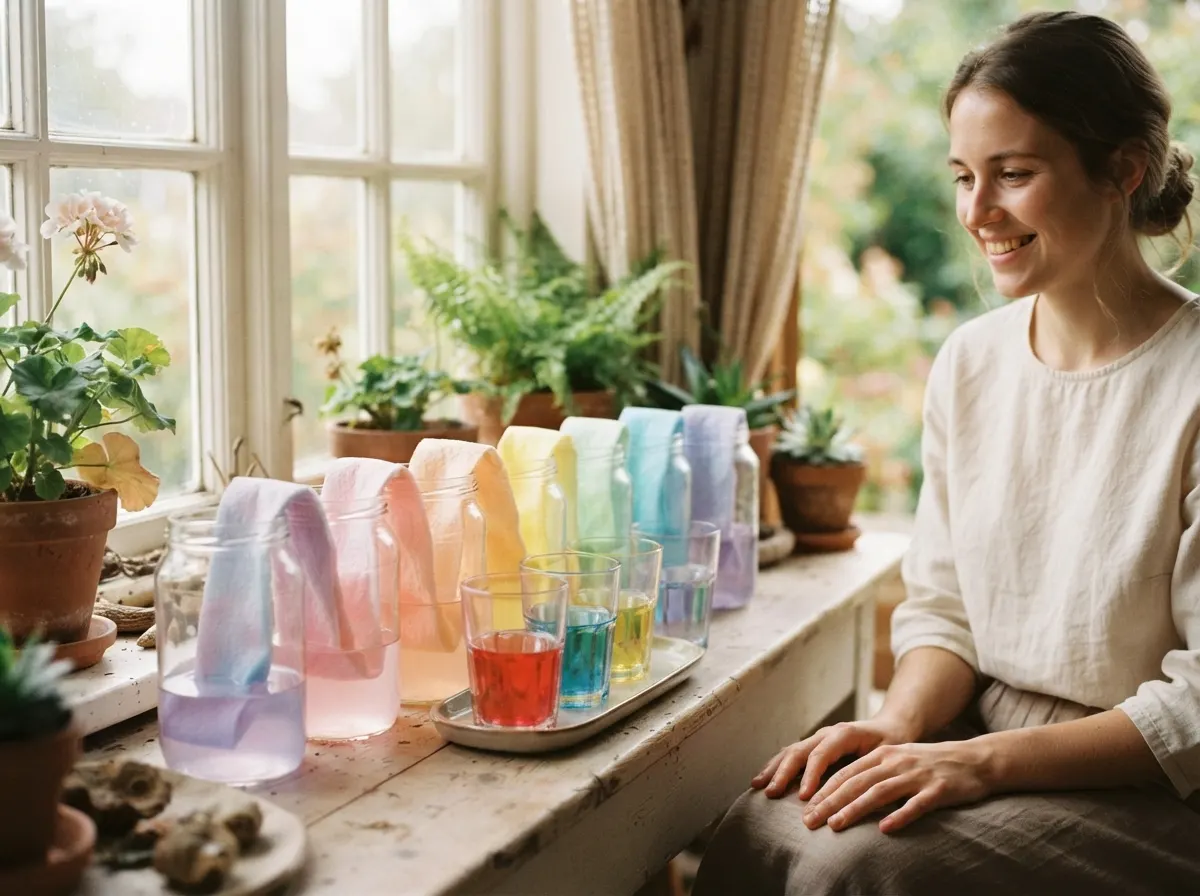
You need: six clear cups or glasses, water, red, yellow and blue food colouring, kitchen paper.
Steps:
- Line up the cups. Fill every other cup with water and add one colour to each: red, yellow, blue.
- Fold strips of kitchen paper and bridge each cup to the next.
- Check back after an hour, then after a few hours.
The science: water climbs up the tiny gaps in the paper fibres by capillary action, and colours meet in the empty cups to mix new ones, like orange and green.
4. Dancing raisins
You need: a clear glass, fizzy water or clear lemonade, a handful of raisins.
Steps:
- Fill the glass with fizzy water.
- Drop in the raisins.
- Watch them sink, rise and sink again.
The science: bubbles of carbon dioxide stick to the wrinkly raisins and lift them up, then pop at the surface so the raisins sink again.
5. Oobleck
You need: cornflour (cornstarch), water, a bowl, food colouring if you like.
Steps:
- Put about two cups of cornflour in a bowl.
- Slowly mix in about one cup of water until it feels thick.
- Punch it quickly, then let your fingers sink in slowly.
The science: oobleck is a non-Newtonian fluid, so it acts like a solid when you push it hard and flows like a liquid when you are gentle.
Tip: put leftover oobleck in the bin, not down the sink, as it can block drains.
6. Red cabbage colour changer
You need: a few red cabbage leaves, hot water (adult job), a sieve, clear cups, lemon juice, vinegar, bicarbonate of soda.
Steps:
- An adult chops the leaves, covers them with hot water and leaves them for 15 minutes.
- Strain the purple liquid into cups once it has cooled.
- Add lemon juice to one cup, vinegar to another and a little bicarbonate of soda to a third.
The science: red cabbage contains a natural pigment that turns pink with acids and green or blue with bases, so it works as a pH indicator.
7. The floating egg
You need: two tall glasses, water, salt, two raw eggs.
Steps:
- Fill both glasses with water.
- Stir lots of salt into one glass until no more dissolves.
- Gently lower an egg into each glass.
The science: salt water is denser than fresh water, so it pushes up harder on the egg and the egg floats.
Wash hands after handling raw eggs.
8. Static balloon magic
You need: a balloon, your hair or a wool jumper, tiny bits of tissue paper.
Steps:
- Blow up the balloon and tie it.
- Rub it on hair or wool for about 20 seconds.
- Hold it near the tissue paper, or near someone's hair.
The science: rubbing moves tiny charged particles called electrons onto the balloon, and the charged balloon attracts light things like paper and hair.
Keep balloons and burst balloon pieces away from babies and toddlers, as they are a choking hazard.
Kids safety goggles
Every real scientist wears them. Make it part of the fun.
How do I make science experiments fun for kids?
A few simple tricks make kitchen science feel like a real lab:
- Ask for a guess first. "What do you think will happen?" turns it into a proper experiment.
- Let them do the pouring. Even if it spills, hands-on is the point.
- Keep a science notebook. A drawing and one sentence per experiment is plenty.
- Change one thing. Try warm milk instead of cold, or less vinegar. That is how real scientists work.
- Dress the part. Goggles and an old shirt as a lab coat make it feel official.
How can kids keep learning after the experiment?
Once the volcano has stopped fizzing, children often want to know more about the real thing. That is a great moment to connect the experiment to the bigger picture.
Kids Science Explorer, for iPhone and iPad, is made for curious kids aged about 5 to 10 and up. It covers 13 science topics, including the solar system, dinosaurs, the human body and night sky constellations, with ten learning games and twelve kitchen experiments. It can read aloud in 9 languages, has a daily Today's Mission, has no ads and no tracking, and works without wifi. See more on the Kids Science Explorer page.
Volcano and chemistry kit
Fizzing, foaming experiments with goggles included. Adult help needed.
If you want something ready made, the science kits section of our shop has crystal growing, volcano and circuit kits to look at. For science outside, try our nature activities for kids, and for more indoor ideas see our rainy day activities.
Frequently asked questions
What age are these experiments for?
They suit children aged about 5 to 10. Younger children can watch and help with simple steps. An adult should supervise every experiment.
Are kitchen experiments safe?
They use common ingredients, but they still need supervision. Keep everything away from eyes and mouths, an adult should handle hot water, and wash hands afterwards.
Which experiment is best for a first try?
Magic milk swirls or dancing raisins. Both take a few minutes, need very little and give a big reaction straight away.
How can I explain the science simply?
Use the one-line explanations above, then ask your child to explain it back to you in their own words. Teaching it back is one of the best ways to remember.
Some links on this page go to Amazon. As an Amazon Associate we earn from qualifying purchases. It never changes the price you pay.