Nature activities for kids, outdoor science they will love
Outdoor science for kids aged 4 to 10. Rock pools, bug hunts, leaf rubbings, stargazing, cloud spotting and bird watching, with simple tips and safety.
In this article
The easiest way to get kids into science is to take them outside. Rock pooling, bug hunts, leaf rubbings, stargazing, cloud spotting and bird watching all turn a walk or a garden into a real investigation, and they need very little kit. The trick is to give children a reason to look closely: a question to answer, something to find, or a notebook to fill. Below are six nature activities for children aged about 4 to 10, with what to bring, what to look for and a few simple safety tips.
We are lucky to have rock pools and big night skies on our doorstep here in the Algarve, but every one of these works in a city park, a back garden or a balcony too.
How do I get my kids interested in nature?
Start with curiosity, not facts. Ask questions out loud, like "I wonder where that snail is going?", and let your child lead the way. A few things help a lot:
- A mission. "Find five different leaves" beats "let's go for a walk".
- A tool. A magnifying glass or binoculars makes everything feel like an expedition.
- A notebook. Drawings, dates and one sentence each. Over time, it becomes a nature diary.
- Your own interest. Children copy what we get excited about.
What can kids find in rock pools?
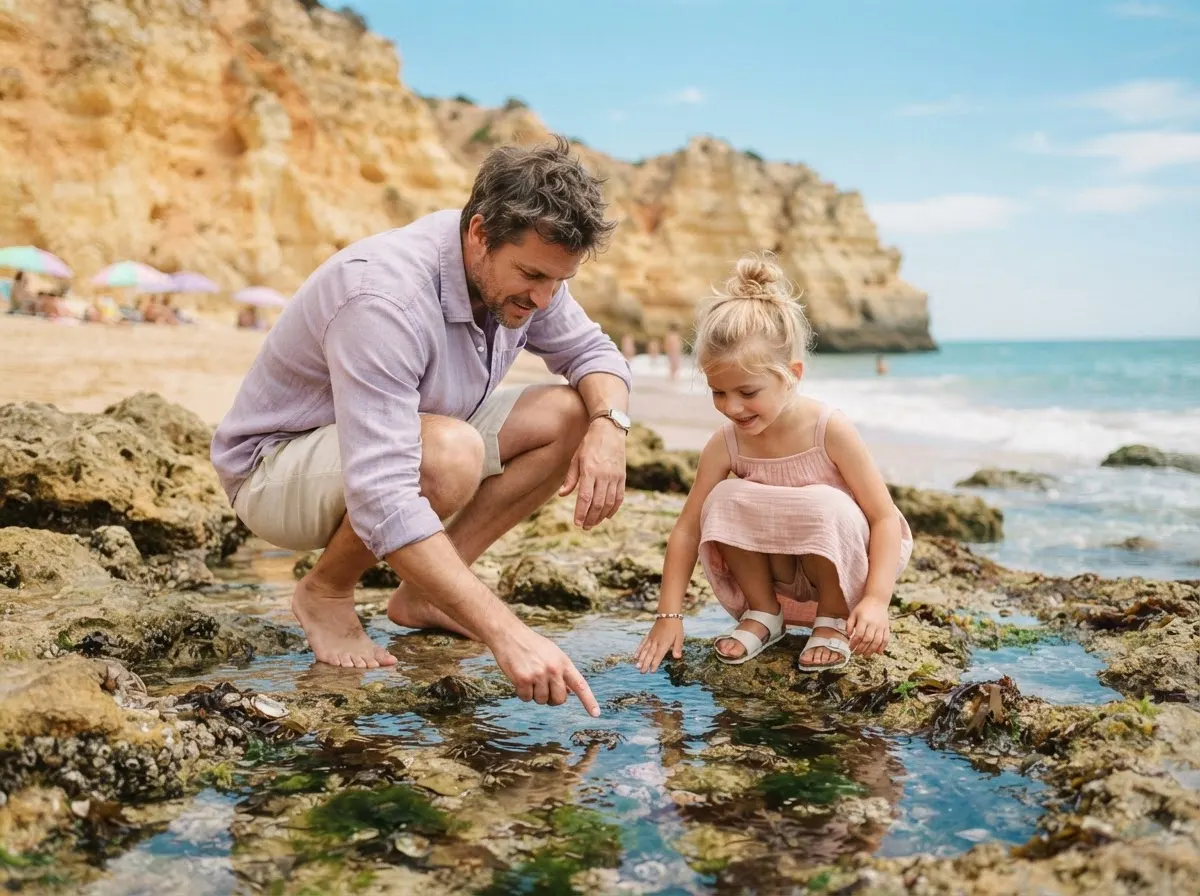
Rock pools are tiny worlds that appear when the tide goes out. Children might find crabs, anemones, limpets, periwinkles, small fish, shrimps and seaweeds of different colours.
What to bring: shoes with good grip, a bucket, a small net and a magnifying viewer.
How to do it:
- Check the tide times before you go, and go as the tide is going out.
- Crouch quietly next to a pool and wait. Creatures come out when the water is still.
- Gently lift a rock, look underneath, and put it back exactly as it was. Creatures live under there.
- If you scoop something up for a closer look, keep it in seawater, handle it gently with wet hands, and return it to the same spot.
Safety: stay close to children near water, watch the incoming tide so you do not get cut off, and keep away from the edge of slippery rocks and big waves. Leave living things on the beach.
The science: rock pool creatures are adapted to survive twice a day when the sea leaves them, by hiding, sticking tight to rocks or closing up.
How do you do a bug hunt with kids?
Bug hunts work anywhere there is a patch of green.
What to bring: a bug viewer or clear pot, a magnifying glass, a small paintbrush for gentle moving.
Where to look:
- Under logs and stones (always roll them back)
- In leaf litter under trees and hedges
- On flowers, for bees, hoverflies and butterflies
- On walls and fences, for spiders and snails
Count legs to sort what you find: insects have six, spiders have eight, woodlice have fourteen. Take a photo or draw it, then let it go where you found it.
Bug catcher kit
A magnifying viewer, net and tweezers for the garden.
The science: sorting animals by features like legs and wings is how scientists began classifying living things.
How do you make leaf rubbings?
Leaf rubbings are a lovely way to bring a walk home.
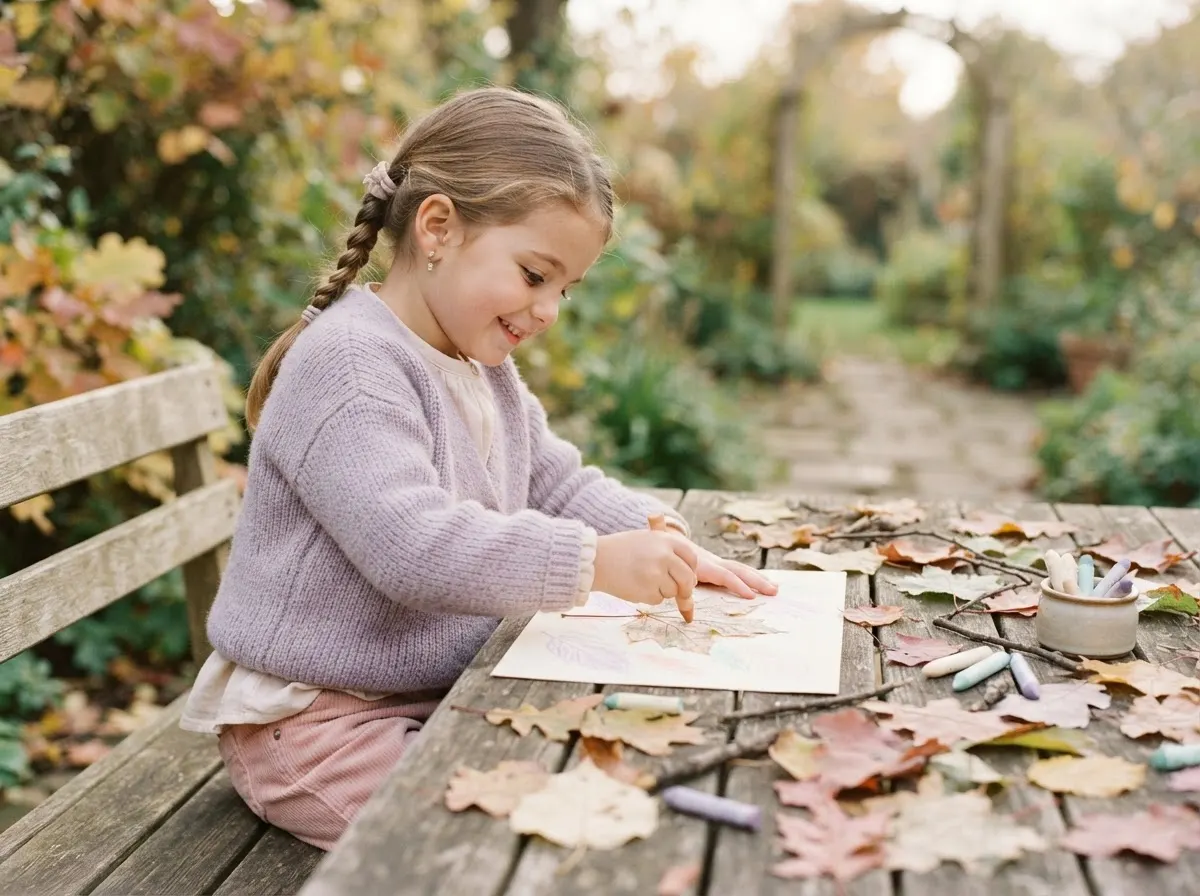
- Collect leaves of different shapes. Fallen ones are perfect.
- Back home, put a leaf on the table with the bumpy side (the veins) facing up.
- Lay thin paper on top and rub the side of a crayon across it.
- Watch the leaf's shape and veins appear.
Try to match the leaves to trees you saw. Older children can label them and make a mini tree guide.
The science: the veins carry water and food around the leaf, a bit like the blood vessels in our bodies.
How can kids start stargazing?
On a clear night, you do not need a telescope to begin.
- Find the darkest spot you can, away from streetlights.
- Give your eyes about 20 minutes to adjust to the dark. Avoid looking at phone screens, or use a red light.
- Look for the Moon first, then the brightest stars and planets.
- Try to find a constellation. In the northern hemisphere, the Plough (Big Dipper) is easy to spot for much of the year, and Orion is a winter favourite.
Binoculars make a big difference, especially for the Moon's craters. A beginner telescope can show more detail, such as Jupiter's moons.
Safety: never look at the Sun, and never point binoculars or a telescope at it.
Kids binoculars
Rubber-coated binoculars sized for small faces. Birds, boats and the moon.
What can kids learn from cloud spotting?
Cloud spotting needs nothing at all, just a sky. Lie on the grass and look up.
- Cumulus: fluffy, cotton wool clouds on fair days
- Stratus: flat grey layers that can bring drizzle
- Cirrus: thin, wispy streaks high in the sky
- Cumulonimbus: huge towering clouds that can bring thunderstorms
Ask your child to guess the weather from the clouds, then check later whether they were right. That is a real prediction tested by observation.
How do you start bird watching with kids?
Birds are everywhere, which makes them a perfect starting point.
What to bring: binoculars, a notebook and patience.
- Sit somewhere quiet, like a garden, park or beach, and stay still for a few minutes.
- Listen first. You will often hear birds before you see them.
- Notice size, colour, beak shape and how the bird moves.
- Keep a list of the birds you see and where. Check back each season.
A bird feeder at home brings visitors right to the window, which is great for younger children.
How can kids keep exploring when they get home?
Nature walks often lead to big questions: why do stars twinkle, how old are dinosaurs, what is inside a bird? That is the perfect moment to keep the curiosity going.
Kids Science Explorer, for iPhone and iPad, is made for kids aged about 5 to 10 and up. It covers 13 science topics, including the solar system, dinosaurs, the human body and night sky constellations, with ten learning games and twelve kitchen experiments. It reads aloud in 9 languages, has a daily Today's Mission, and has no ads and no tracking. It also works without wifi, which is handy on a camping trip. See the Kids Science Explorer page.
For more kit ideas, browse the outdoor explorers section of our shop. On wet days, try our kitchen science experiments or our list of rainy day activities.
Frequently asked questions
What age are nature activities suitable for?
Most of these suit children from about 4 to 10. Toddlers can enjoy simpler versions, like looking for snails or collecting leaves, with close supervision.
Is it OK to take creatures home?
It is best to look, learn and let them go where you found them. Return rocks and logs to how they were, so the creatures' homes stay safe.
Do kids need a telescope to stargaze?
No. The Moon, bright planets and constellations are all visible with the naked eye. Binoculars are a great next step.
How can I keep nature activities safe?
Supervise near water and on rocks, check tide times before rock pooling, wash hands after handling soil and creatures, and never look at the Sun.
Some links on this page go to Amazon. As an Amazon Associate we earn from qualifying purchases. It never changes the price you pay.