How much screen time is OK for toddlers? An honest guide
What the WHO and AAP actually say about screen time for babies and toddlers, and practical, guilt-free ways to keep it short, shared and good quality.

In this article
- What does the WHO say about screen time for under 2s?
- What does the American Academy of Pediatrics recommend?
- Why does co-viewing matter so much?
- How can I keep toddler screen time healthy?
- What counts as good-quality content for a toddler?
- Where do apps like Baby Games fit?
- What can we do instead of screens?
The World Health Organization's 2019 guidance says screen time is not recommended for children under 2, and that children aged 2 to 4 should have no more than 1 hour of sedentary screen time a day, with less being better. The American Academy of Pediatrics adds that video calls with family are fine for babies, and that when screens are used with young children, it is best to choose high-quality content and watch or play together. Those are the headlines. Real life with a toddler is messier, so this guide is about what that looks like on an ordinary day.
No guilt here. Most parents use screens sometimes, often to get dinner made or survive a long journey. The aim is to know what the guidance says and make choices that work for your family.
What does the WHO say about screen time for under 2s?
In 2019 the WHO published guidelines on physical activity, sedentary behaviour and sleep for children under 5. On screens, they say:
- Under 1 year: screen time is not recommended.
- 1 year: sedentary screen time (such as watching TV or videos, or playing computer games) is not recommended.
- 2 to 4 years: no more than 1 hour of sedentary screen time a day. Less is better.
The guidance also encourages reading and storytelling with a caregiver when children are sitting still, and plenty of active play throughout the day. The idea is less about screens being dangerous and more about protecting time for the things young children need most: movement, sleep, and interaction with the people around them.
What does the American Academy of Pediatrics recommend?
The AAP's advice for young children follows a similar direction, with some practical detail:
- Under 18 months: avoid screen media other than video chatting.
- 18 to 24 months: if you want to introduce digital media, choose high-quality content and use it together with your child, rather than letting them use it alone.
- 2 to 5 years: limit screen use to about 1 hour a day of high-quality programmes, and co-view so you can help your child understand what they see and relate it to the world around them.
The AAP also suggests keeping mealtimes and bedrooms screen free, avoiding screens in the hour before bed, and making a family media plan so everyone knows the rules.
Why does co-viewing matter so much?
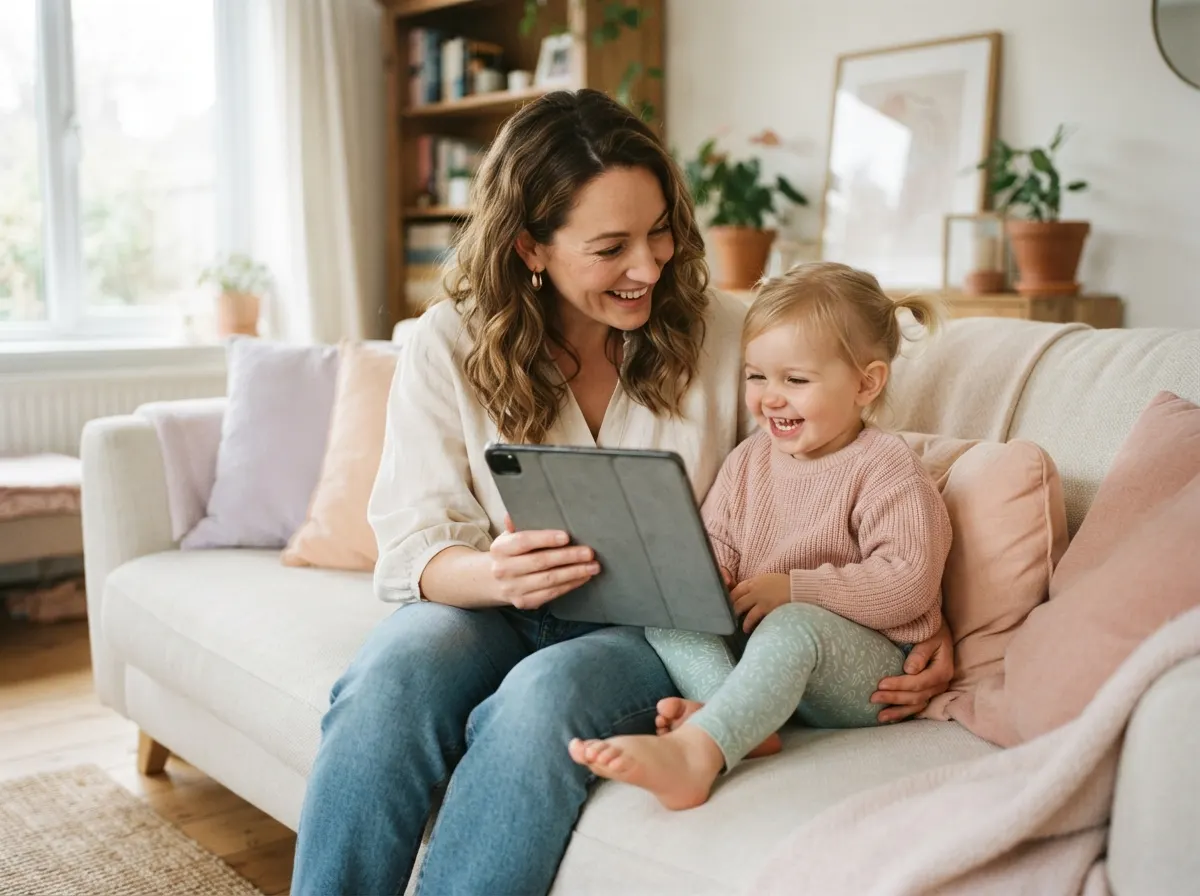
Young children learn language and ideas mostly from people: your voice, your face, the back-and-forth of conversation. When you sit with your toddler and talk about what is happening on the screen, you turn it into a shared activity. "Look, a cow. What does the cow say?" is very different from a child watching alone.
Co-viewing also lets you:
- Spot content that is too fast, too loud or not right for your child
- Stop at a natural moment rather than mid-tantrum
- Link what they see to real life, like finding a red ball after a game about colours
How can I keep toddler screen time healthy?
Here are practical habits many families find useful:
- Decide before you start. One short show or a few minutes of an app, agreed in advance. A timer helps.
- Pick quality. Slower pace, simple language, no ads, and content made for their age.
- Sit together when you can. Even a few minutes of joining in makes a difference.
- Avoid screens at meals and before bed. Keep the hour before sleep for bath, books and cuddles.
- Use screens as a bridge, not a babysitter. A short session followed by a real activity, like matching socks by colour after a colours game.
- Keep devices out of bedrooms. It makes bedtime and early mornings easier.
- Model it yourself. Toddlers copy what we do with our phones, too.
What counts as good-quality content for a toddler?
There is no official seal of approval, but these are sensible things to look for:
- No ads and no pop-ups. Young children cannot tell adverts from content.
- Short sessions with a natural end. Content that does not push "one more" forever.
- Slow pace and simple language. Calm voices, clear words, not a constant flash of colours.
- Real-world links. Animals, colours, shapes and numbers your child can then find around the house.
- Something to do together. Pointing, naming and taking turns rather than passive watching.
Be wary of any app or programme that promises to make children smarter. There is no good evidence that a screen can do that. Children learn most through play, talking and relationships, and screens are at best a small extra.
Where do apps like Baby Games fit?
We make Baby Games, so we think about this a lot. We designed it to fit the way the guidance describes good screen use for children aged 2 and over: short, calm and played together.
Baby Games: Toddler Learning is for iPhone and iPad, for ages 1 to 4. Each day's Play Time is 3 to 5 short games with Bo the bear that end with a sticker, so the session finishes on its own. It covers animals, colours, shapes, numbers 1 to 10, letters A to Z, and days and times, with a voice in 6 languages. There are no ads, and a parental gate protects the parent area, where you can see minutes played and words learned. For under-2s, the guidance is to avoid solo screen time, so if you do use it at that age, sit together and keep it very short. More on the Baby Games page.
We do not claim it makes children smarter. It is a short, ad-free game to play side by side, and the best part is the talking you do around it.
What can we do instead of screens?
The best alternatives are simple and often free. Try:
- Reading a board book and pointing at pictures together
- Singing songs with actions
- Water play in the sink or bath
- A walk where you name everything you see
- Building towers and knocking them down
Our guide to toddler first words activities is full of easy everyday ideas, and our list of rainy day activities helps on the days you are stuck inside. For toy ideas by stage, see the best learning toys by age.
If screens are part of travel days, a pair of volume-limited headphones protects little ears.
Volume-limited headphones
Kids headphones capped at a safe volume, great for travel.
Frequently asked questions
Is video calling grandparents OK for a baby?
Yes. The AAP specifically says video chatting is fine for babies and toddlers. It is interactive and keeps them connected with family.
Is 1 hour of screen time a target for my 3 year old?
No. The WHO says no more than 1 hour a day for 2 to 4 year olds, and that less is better. It is a ceiling, not a goal.
Do educational apps make toddlers smarter?
There is no good evidence that any app makes children smarter. Short, high-quality content used together can be a fun extra, but play, talk and reading matter far more.
What if we are already over the limit?
Start small. Swap one session for a shared activity, keep screens away from meals and bedtime, and sit with your child when they do use a screen. Small changes add up.
Some links on this page go to Amazon. As an Amazon Associate we earn from qualifying purchases. It never changes the price you pay.