15 rainy day activities for kids aged 2 to 10
Fifteen indoor activities for rainy days, grouped by age from toddlers to 10 year olds, using things you already have at home.

In this article
The best rainy day activities use what you already have: a blanket fort, a sock puppet show, kitchen science, a treasure hunt or a cardboard box city. For toddlers, keep it short, sensory and hands-on. For 5 to 7 year olds, add a little challenge and a lot of making. For 8 to 10 year olds, give them a real project they can own. Below are 15 ideas grouped by age, most needing nothing more than a cupboard raid and a bit of floor space.
Ages are a rough guide. Plenty of 9 year olds still love a blanket fort, and little ones love joining in with the big kids' projects. Supervise anything with water, scissors or small pieces.
What can toddlers do indoors on a rainy day? (ages 2 to 4)
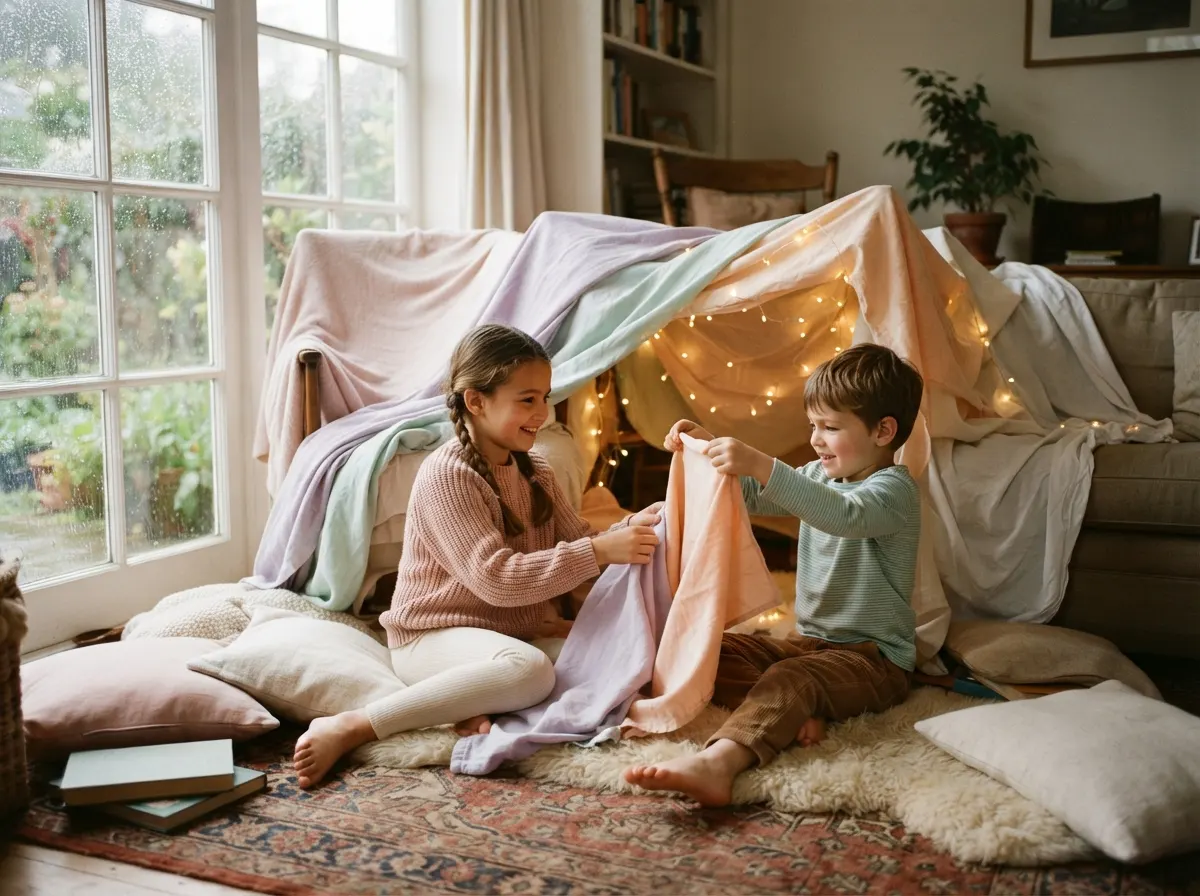
1. Blanket fort
Drape blankets and sheets over chairs and the sofa, add cushions and a torch, and take some books inside. Reading in a den feels like an adventure.
2. Water play in the sink or bath
Fill the sink or a washing-up bowl, add cups, spoons, a sieve and a few toys. Pouring, filling and splashing can last surprisingly long. Never leave a young child alone near water.
3. Colour hunt
Pick a colour and hunt around the house for things that match. Line them up and name them together. It is a simple way to practise colours and new words.
4. Sticker and scribble station
Tape a big sheet of paper to the table or floor, and hand over chunky crayons and some stickers. Talk about what they are drawing, rather than asking what it is.
5. Dance and freeze
Put on music and dance. When the music stops, everyone freezes. Add rules like "freeze like a cat" or "freeze tiny" for extra giggles.
For more ways to build language while you play, see our guide to toddler first words activities.
What indoor activities suit 5 to 7 year olds?
6. Kitchen science
Make a baking soda volcano, swirling milk colours or dancing raisins. Our list of easy science experiments for kids has eight ideas with steps and the science explained simply.
7. Cardboard box city
Collect boxes, tubes and egg boxes and build a town for toy cars or figures. Add roads with masking tape on the floor.
8. Indoor treasure hunt
Write simple clue cards that lead from room to room, with a small treat or sticker at the end. Children who can read can follow the clues; younger siblings can follow picture clues.
9. Puppet show
Make puppets from old socks or paper bags, then put on a show behind the back of the sofa. Writing the story is half the fun.
10. Paint and print
Use washable paints to print with potato halves, sponges, leaves collected earlier in the week, or hands and feet.
Washable kids paint set
Bright, washable paints with chunky brushes for kitchen-table art.
What can 8 to 10 year olds do on a rainy day?
11. Grow crystals
A crystal kit or a simple salt or sugar solution and a piece of string gives a project that changes every day for a week. Keep a daily drawing log. Adult help needed for hot water.
12. Build a marble run
Tape cardboard tubes, cut-up boxes and paper cups to a wall or the side of a big box. Test, adjust and test again. This is real engineering.
13. Make a stop-motion film
Use toys, clay or LEGO and a phone or tablet to take one photo at a time, moving the characters a tiny bit between each shot. Even a 10-second film takes planning and patience.
14. Start a science notebook
Pick a topic they love, like planets, volcanoes or the human body, and make a mini book with drawings, facts and questions to find answers to.
15. Cook something
Following a simple recipe practises reading, measuring and timing. Pancakes, flatbreads and fruit salad are good first choices. An adult should handle the hob and oven.
Crystal growing kit
Grow your own crystals over a week and watch them change every day.
How do I keep kids busy indoors without screens all day?
A few things help the day go smoothly:
- Plan a loose rhythm. Mix one active thing, one making thing and one calm thing. Then repeat.
- Get things ready first. Set up the activity before you invite the children, so they start straight away.
- Let them lead. If the fort becomes a pirate ship, go with it.
- Accept some mess. Cover the table and keep a towel nearby.
- Add some movement. Dance breaks, an obstacle course with cushions or a game of hide and seek burn off energy.
- Use screens with intention. If screens are part of the day, pick something calm and ad free, and keep it short. Our honest guide to screen time for toddlers explains what the WHO and AAP recommend for younger children.
What is a good rainy day activity for curious kids?
Older children who ask a lot of questions often love turning a rainy afternoon into a science afternoon: an experiment, a bit of reading about why it works, then a quiz or game.
Kids Science Explorer, for iPhone and iPad, is made for kids aged about 5 to 10 and up. It covers 13 science topics, including the solar system, dinosaurs, the human body and night sky constellations, and includes ten learning games and twelve kitchen experiments to try at home. It reads aloud in 9 languages, has a daily Today's Mission, has no ads and no tracking, and works without wifi, so it is handy on trips too. Find out more on the Kids Science Explorer page.
When the rain stops, take the curiosity outside with our nature activities for kids, from bug hunts to cloud spotting.
Frequently asked questions
What are cheap rainy day activities for kids?
Blanket forts, treasure hunts, cardboard box cities, dance and freeze, and kitchen science all cost little or nothing and use things you already have.
How do I entertain a 2 year old indoors?
Short, hands-on activities work best: water play, colour hunts, dancing, stickers and reading in a den. Swap activities often, as toddlers have short attention spans.
What can older kids do on a rainy day?
Give them a project they can own over several hours or days, like growing crystals, building a marble run or making a stop-motion film.
How can siblings of different ages play together?
Choose open-ended activities like forts, box cities or puppet shows, where older children can build and younger ones can join in at their own level.
Some links on this page go to Amazon. As an Amazon Associate we earn from qualifying purchases. It never changes the price you pay.